Upload media inline in WYSIWYG editor in modern Drupal 10+ with CKEditor5
It seems like the best practice is that we should try to use the media manager rather than just drop in photos using the text editor method (which doesn't seem to get the photos into the media library), but how do we get the photos in the media library to be able to wrap with text and not be visually separate content?

Display lists naturally with the In Other Words module for Drupal
It is common for a Drupal site to list multiple items. It could be several authors of a single article, the days that a recreation center is open, or the flavors an ice cream parlor serves. Clean, structured data is a strong point of Drupal, but the display of that structured content is limited. That is why Agaric, with support from DevCollaborative, made In Other Words, a Drupal module that gives site builders the power to configure precise and natural ways to display lists of items.

Did the Internet make you a criminal? How can it be proven?
Let's explore digital threats and solutions, including Internet Access, Big Data, and Surveillance Capitalism. Discover how the data collected by big tech can be used to incriminate you and learn practical tips to enhance online privacy. Explore ethical considerations and challenges posed by emerging technologies like AI and social media. Gain a deeper understanding of online privacy and learn to navigate the digital world confidently while protecting your personal information effectively.

Always run the desired PHP version when your hosting solution has multiple versions available
At Agaric, we perform a lot of Drupal upgrades. These very often involve transitioning away from older versions of PHP. Even when your hosting service provides multiple versions of PHP, you can still run into issues activating the appropriate one for each site: whether that's within the web server, at the command line, or via drush (or other tools). In this blog post, we'll be providing remedies for all of these cases. Most content applies to any PHP application.

How to filter a view by content that references the current node in modern Drupal
A basic step-by-step guide on configuring relationships and contextual filters in a Drupal view.

The development of Therapy Fidelity
We developed a React.js therapy application that supports evidence based therapy by helping therapists and their clients stay accountable to a standard protocol. This post covers some of the architectural decisions that we made to facilitate a fast time-to-market for this feature rich and carefully secured therapy dashboard.

Recommendations for social media as Twitter melts down: Host your own community
As Elon Musk destroys Twitter, a lot of clients have asked about alternative social media, especially 'Mastodon'— meaning the federated network that includes thousands of servers, running that software and many other FLOSS applications, all providing interconnecting hubs for distributed social media. Agaric has some experience in those parts, so we are sharing our thoughts on the opportunity in this crisis.

How to add an audio player to a content node in Drupal 9
Getting an audio player to show on your content nodes only takes a few steps. However, like many things in Drupal, knowing what those few steps are can be a bit of a challenge. This short guide will provide a basic introduction for anyone looking to use this core functionality on their site.

Drupal 9 Component Plugin ContextException "not a valid context" after CTools, Symfony update
Upgrading to CTools 3.10.0 and/or various Symfony upgrades can break the simple task of adding content on your Drupal site.

Drupal 9.4 installation with existing configuration fails because "unable to uninstall the MySQL module"!?
How to deal with the error "Unable to uninstall the MySQL module because: The module 'MySQL' is providing the database driver 'mysql'.."
Uniting Visions: Kicking off Thursday 3pm ET planning & building sessions for democratic conversation scaling platform, Visions Unite
Hi friends and collaborators, join us today at 3pm ET (or any subsequent Thursday at 3) as we kick off a series of research, planning, discussion, and building sessions for Visions Unite.

Here is a social media microblog-sized post just to say we are syndicating to social.coop Mastodon and Twitter thanks to the Indieweb module!
It's great to be here, and there, and there.

Create and use a custom permission in your module
You can define your own permissions for the Drupal permissions page (/admin/people/permissions in modern Drupal, Drupal 8, 9, 10, and beyond) and then add conditional options to your code to do different things based on the role of the user and the permissions configured by a site administrator. See how!
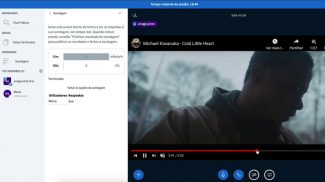
Why we resist Zoom and choose BigBlueButton for video chat
We can look at the recent popularity of some widely used platforms like Zoom and ask ourselves some questions as to why we still use them when we know a lot of terrible things about them. Agaric prefers to use a free/libre video chat software called BigBlueButton for many reasons, the first one being the licensing, but there are many reasons.
Drupal toolbar not working in dev environments in Firefox? Here's why.
Drupal's toolbar not showing due to Uncaught DOMException quota has been exceeded may be due to sites sharing a top-level domain (default for some local development environments like DDEV) combined with a Firefox bug.

Upgrade from Drupal 6 or 7 when it is right for you: In the era of modern Drupal, release cycles of major versions have only minor importance
Drupal 7 has a much longer lifespan than the (already pushed back) official date, and Drupal 8 has an essentially infinite lifespan because it can update in-place to Drupal 9 easily and the same will be true of Drupal 10, 11, ∞. There's no reason to rush an upgrade— but there's no reason to wait either.
Community-managed categories
A long-held goal, this functionality still hasn't been built. But if you're interested, please contact us! Community-managed taxonomy opens categorization of content to the site's community. Users can influence both what terms nodes are tagged with and how these terms are themselves organized.
Double-edged Raiser: Past time to ditch Blackbaud
I have watched in sadness and sometimes anger as large non-profit after large non-profit collectively poured enough money into Raiser's Edge and other Blackbaud licenses and consulting services to fund massive feature enhancements for the main FLOSS alternative, CiviCRM— improvements which would then be free for everyone, forever.